

The source is the project
The agent, Studio, CLI, SDK, and Player do not create separate versions of the video. They work with the same project files.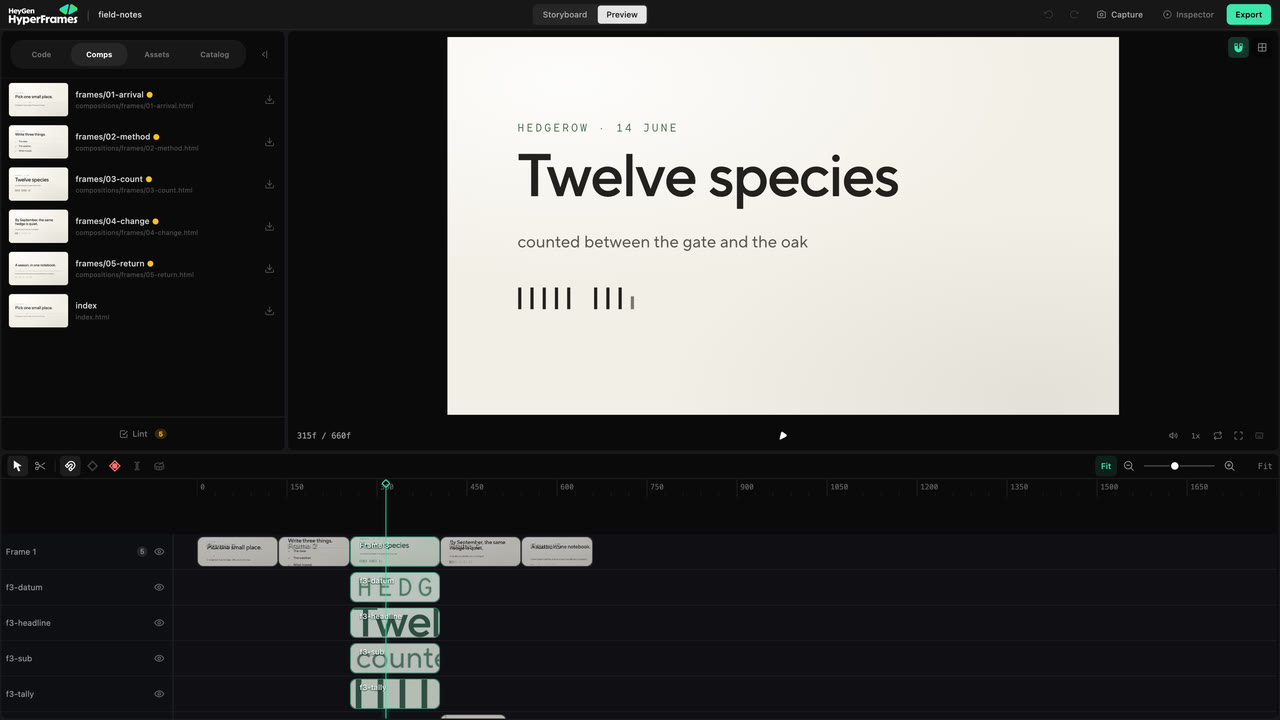
The same editable project open in Studio, with its source, canvas, controls, and timeline.
What the agent creates
A larger project often looks like this:index.html and an asset; a narrated launch film benefits from a brief,
storyboard, script, and separate scenes.
Compositions hold the video together
A composition is a finite, seekable piece of the project. The main composition is the complete sequence. Other compositions can be scenes, captions, title systems, or visuals reused more than once.Time is part of the source
Timed elements carry their start, duration, and track in HTML:Variables keep approved parts changeable
A variable exposes something that is meant to change—such as a title, logo, color, price, or customer name—without rebuilding the layout. One composition can produce several approved versions while preserving its design and motion. Use a variable when the structure should stay fixed. Use a normal edit when the structure itself needs to change.How a project moves forward
There is no required seven-step ceremony. The project records only the decisions its size and review process need.
Review the message and sequence before polishing individual frames. Once the
project looks right, run the checks, render it, and watch the exported file.
Why rendering can repeat the same moment
HyperFrames seeks the composition to an exact time, captures the frame, and advances. Media and audio follow the same timeline. For the same source, media, and settings, an exact timestamp should resolve to the same project state. Compositions therefore avoid the current clock, unseeded randomness, and render-time network requests.Go deeper when you need it
Reuse a design with variables
Expose approved content without opening the layout.
Finish and share a video
Review, check, render, watch, and deliver the same project.
Composition structure
Use nested compositions and exact source attributes.
HTML schema
Look up the complete technical composition contract.