

Know the workspace
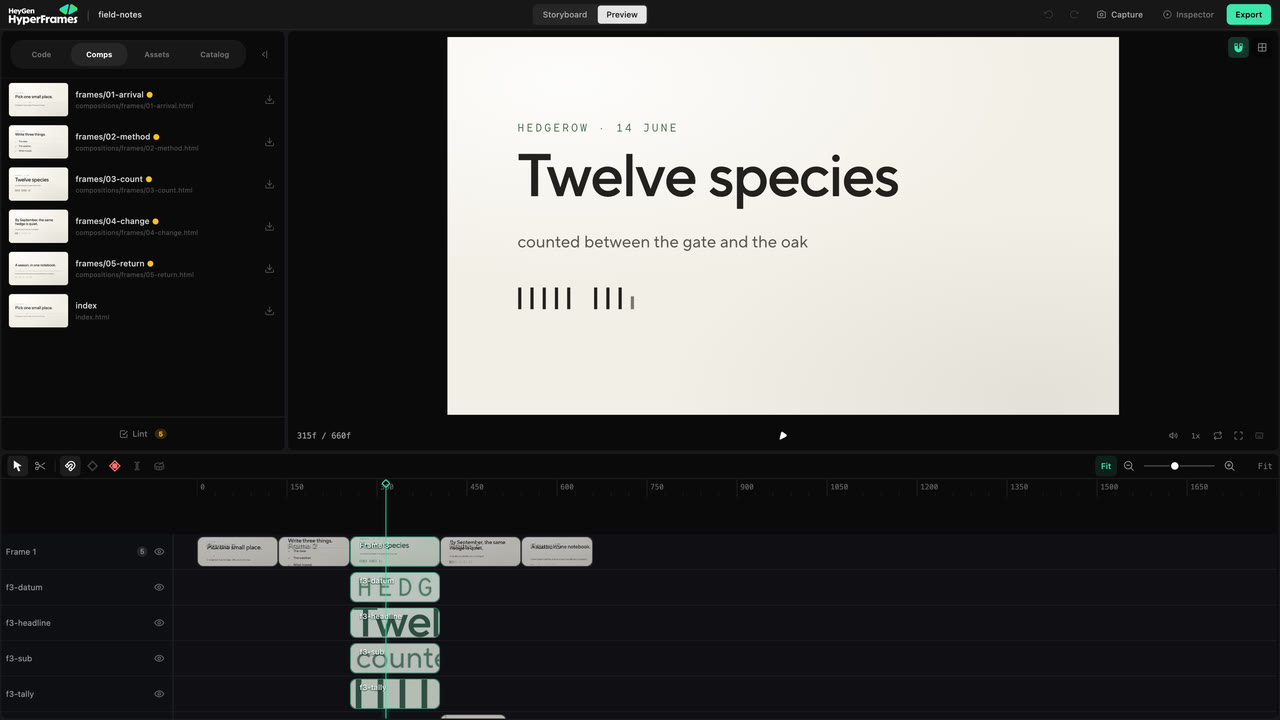
Preview keeps project files, the live frame, the Inspector, and time-based editing in one workspace.
- Preview shows the built project. The live frame is in the middle, the timeline is below, project tools are on the left, and the Inspector is on the right. Drag any panel tab to move it, and use Window in the header to reopen a closed panel or reset the layout. Studio remembers your layout for each project.
- Code, Compositions, Assets, and Catalog expose the project source, compositions, media, and reusable visuals. Design, Layers, Variables, and Renders control the selected work.
Compose preview guides in a host app
Host apps can compose the same rulers, safe margins, grid, and snap toolbar that Studio uses over their own preview iframe. The provider owns the iframe geometry and shared preferences, so the host supplies its current iframe element and chooses the parts to render:Make one safe edit
Pause where the problem is visible. Click the element on the canvas, or choose it in Layers when several elements overlap. Then change only the property you meant to change.The canvas selects the visible element; Design exposes the properties Studio can edit safely.
Change time on the timeline
Drag a clip to move it earlier or later. Drag an edge to change its duration. Use the razor only when one supported clip must become two.Timing changes stay visible beside the frame and neighboring tracks.
Hand a broader change back to the agent
Studio is best for a change you can point at. Ask the agent when the request affects the story, several scenes, source research, or unfamiliar project code. Use Ask agent or Copy to Agent when Studio offers it, then add the human intent that the copied context cannot know:Check and render the version
Watch the project from the beginning, run Lint, and fix the reported issues. Before delivery, run the project-level browser gate as well:Studio queues and monitors a render from the same project.
Related topics
Edit the frame
Select, style, arrange, group, and replace visible elements.
Edit timing
Trim, split, move, and retime clips on the project timeline.
Finish and share
Review, validate, render, and deliver the project.